• Skip to main content
  • Skip to header right navigation
  • Skip to site footer
Howcast

Howcast

The best source for fun, free, and useful how-to videos and guides.

  • Arts & Crafts
  • Entertainment
  • Food & Drink
  • Health
  • Home & Garden
  • Relationships
  • Explore Guides
  • Contact
  • About
  • FAQs
  • Explore Guides
  • Arts & Crafts
  • Entertainment
  • Food & Drink
  • Health & Wellness
  • Love & Relationships
  • Home & Garden
EntertainmentHow to Play Poker

Aggressive Play vs. Passive Play in Poker

Transcript

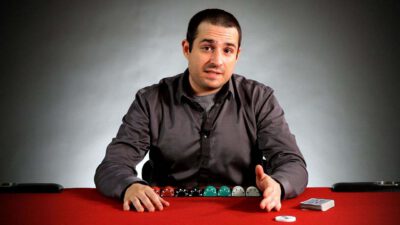
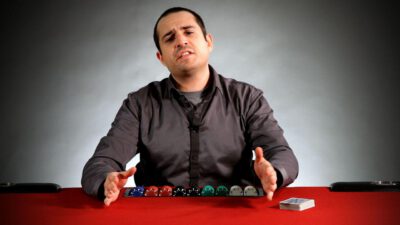
Hey, I’m Nicky Numbers, I’m a professional poker player and I’m going to talk to you today about playing aggressively versus playing passively. The most important thing to know about passive play in No Limit Hold ‘Em is that it’s rarely correct. The overwhelming majority of the time when you’re playing a hand and you’re playing across multiple streets, you want to be the aggressor.

Whenever you play poker you’re going to make mistakes, but you control the kinds of mistakes that you’re going to make. You don’t want to make passive mistakes, you want to make aggressive mistakes. When you’re aggressive sometimes good things accidentally happen to you. When you’re passive, very rarely do good things accidentally happen to you.

Passive players enter pots by limping into them, by calling raises, and by infrequently raising and re-raising themselves. Aggressive players, on the other hand, enter pots and they come in raising, they’re raising or they’re re-raising and they’re rarely entering the pot passively except under very specific criteria. And the reason for that is because a passive strategy is a losing strategy unless it’s executed just right, which is really hard to do. In general, if you’re trying to choose between calling or folding, fold.

If you’re trying to choose between calling or raising, raise. In other words, if you’re going to continue in a hand as a general default you want to be the aggressor.

Lessons in this Guide

How to Play Poker with Nick “Nicky Numbers” Brancato

Luck vs. Skill in Poker Playing

How Much You Should Tip the Poker Dealer

Fold Equity in Poker

Aggressive Play vs. Passive Play in Poker

How to Be a Tight Poker Player

How to Be a Loose Poker Player

Blind Stealing in Poker

How to Slow Play in Poker

How to Semi-Bluff in Poker

How to Bluff in Poker

Post-Flop Strategy in Poker

Pre-Flop Strategy in Poker

How to Calculate Pot Odds in Poker

How to Calculate Poker Outs

Poker Chip Tricks

How to Bet Poker Chips

How to Shuffle Poker Chips

How to Count Poker Chips

How to Stack Poker Chips

Tilting in Poker

Why You Should Never Discuss Your Poker Hand

Poker Etiquette

What Does “On the Button” Mean in Poker?

What Is Position in Poker?

How to Check-Raise in Poker

How Much to Raise in Poker

How to Raise in Poker

How to Know When to Bet in Poker

How Much to Bet in Poker

How to Bet in Poker

How to Check in Poker

Poker Blinds

Poker Antes

How to Evaluate Your Starting Hand in Poker

Best Starting Hands in Poker

Copyright © 2026 · Howcast · All Rights Reserved · Powered by BizBudding Ventures with Springwire.ai

Privacy Manager