Transcript
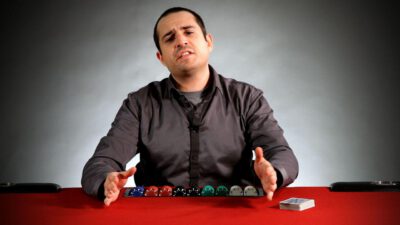
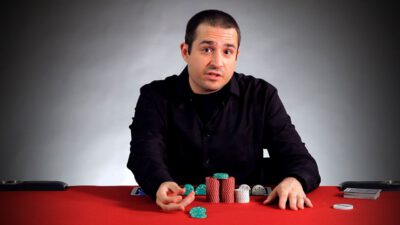
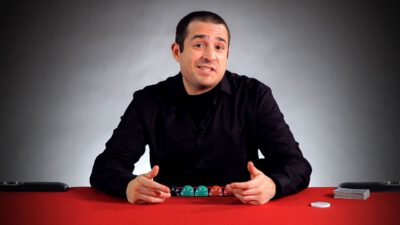
Hey. I’m Nicky Numbers. I’m a professional poker player and I’m going to talk to you today about tilting. To tilt means to play sub-optimally, to play off your regular gain. It means something has thrown you off the decision-making path you would normally make. If you’re tilting that means you’re making weaker than normal decisions. You’re not making decisions to the best of your ability.
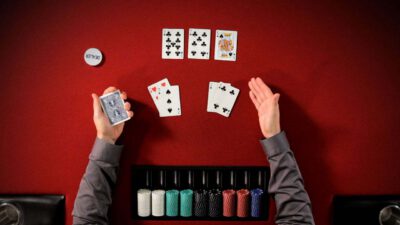
Frequently, tilting is associated with taking a bad beat. You have a good hand but it gets cracked by a lesser hand often in some horrific manner and then you get upset. You start to steam. Your blood starts to boil. You start to get angry about it. It starts to bother you. It eats away at you. You can’t believe the injustice. That’s when you go on tilt. It’s a mental game problem that affects most poker players, in fact, probably all poker players at least to some extent or another.
Even if you work really hard to control tilt, you’re still going to be subject to it sometimes. Now, it’s important to understand that tilt doesn’t only occur when you take a bad beat or when you get cold-decked, where your kings run into aces or set over set or something like that. Tilting can occur for something completely off the felt. Maybe you have a bad day. Maybe you’re tired. Maybe you’re hungry. Any number of things can affect your decision-making ability at the table.
Some people classify tilt as anything that results in you making worse decisions than you would have made in a vacuum. In other words, with all the time in the world to make your poker decisions, what’s the pure decision that you would have made? If you make one different from that, then it could be the result of tilt. Most commonly, tilt has to do with what’s going on at the table and whether or not a player is upset.
The more upset they are, in general, the greater the chances that they may be on tilt and would do something they wouldn’t normally do. Everybody tilts in different ways. Some people tilt by playing more hands. Some people tilt by playing fewer hands. Some people tilt by being more aggressive. Others tilt by being more passive. How you tilt is unique to you as an individual, but it’s very important to be aware of it. The mental side of poker is at least as difficult to master as the strategy side of the game and it’s very, very underrated.