Transcript
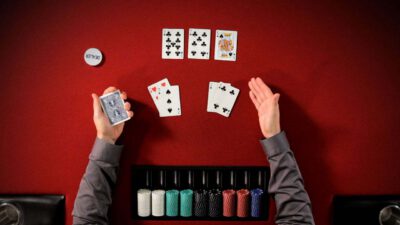
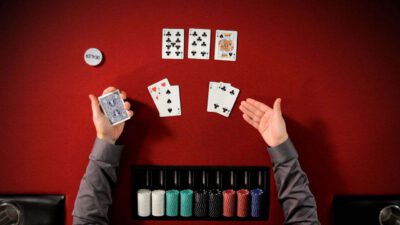
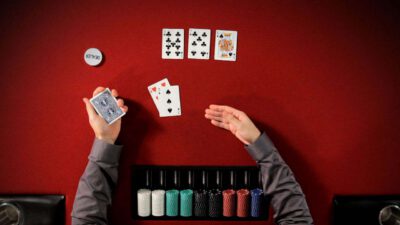
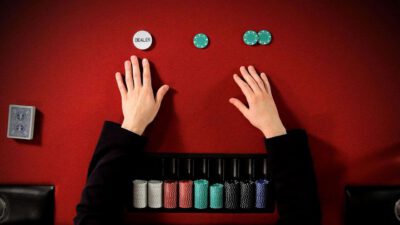
Hey. I’m Nicky Numbers, professional poker player, and now, I’m going to talk to you about stealing the blinds. First of all, in order to steal the blinds, there have to be blinds out there, which means there has to be a button. So if the button is across from me, and the blinds are 50 and 100, then if you were trying to steal the blinds, you would be making a preflop raise that will result in sometimes winning an uncontested pot. That means that you raise preflop, and sometimes everyone folds. A classic steal attempt of the blinds is done when it folds to either the cutoff, which is one seat off the button, or it folds the button, or it folds to the small blind. If it folds to anybody either in late position, or in the small blind, and they raise verses the pot, that’s traditionally going to be thought of as a steal attempt.
This sometimes also extends to even one seat further, from not just the button, not just the cutoff, but to the seat before the cutoff, which is often referred to as the hijack. Stealing the blinds is incredibly important in a tournament, and much less important in a cash game. When you play a tournament, and you have a starting stack, if you do nothing with that starting stack, it’s going to erode over time, because you’re paying blinds antes. Also, the blinds are increasing, which means that the size of your stack decreases relative to the blinds. If you just stand still and do nothing, eventually you’re going to result in just having one big blind in your stack. So you have to steal blinds in order to keep pace with the escalating tournament structure. In a cash, stealing blinds is far less important, because they’re consistent.
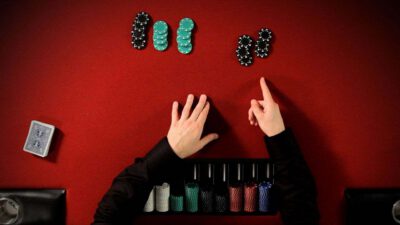
They don’t increase, and they usually only represent a very small percentage of the chips you have in front of you. In addition to the blinds, sometimes there’s also antes. So let’s say the blinds are, instead of 50 or 100, 100 to 200. It’s common at the 100 to 200 blind level for there to be 25 antes that every player puts into the pot. If there’s 10 players at the table, then they’ll be 10 antes in the pot. One from each player. In this case of blinds of 100 and 200, and 10 times 25, in antes in the pot, that’s 100 plus 200 or 300, plus 250, for a total of 550 in the pot, before the action has even started. That’s 550 in the pot instead of the 300 that would be in the pot with no antes. So you can see the pot is almost twice as big when antes come into play. When antes are present, the frequency with which you attempt to steal the blinds should increase, because there’s more dead money out there that can potentially be won.
Dead money is money that players put into the pot without necessarily getting anything for it. The only thing they get for putting out the blinds and antes is their whole cards. However, they’re not guaranteed a flop, or anything else. So it’s dead money, because they’re putting it in blind. The best opportunity for stealing blinds and antes has everything to do with the number of remaining opponents yet to act behind you. People often talk about stealing from under the gun. UTG stealing it’s called, because they feel that they can represent a good hand by raising from early position. However, there’s actually a direct linear correlation between the chances of you winning the pot uncontested preflop, and the number of remaining opponents. That means that under the gun is the seat at the table least likely to win uncontested pot.
The seat most likely, not the hijack, actually not even the button, but rather the small blind, because the small blind only has one player to get through when they raise in order to make them fold successfully when the blinds. The next best seat is the button, followed by the cutoff, followed by the hijack. In other words, the fewer remaining opponents yet to act when it’s been folded to you preflop, the better your chances of successfully stealing the blinds.