Transcript
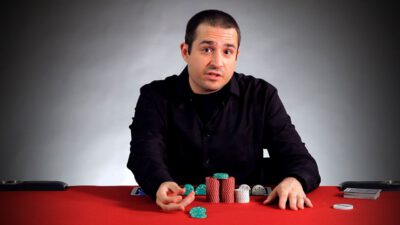
Hey, I’m professional poker player Nicky Numbers, and I’m going to explain slow playing. Slow playing is another way of saying “trapping”. When you’re trapping your opponent, you’re deliberately allowing them to stay in the hand to induce action from them. Trapping can range from checking and giving your opponent free cards to just calling a bet or raise or re-raise that they make in an effort to under-represent your hand or induce aggressive actions from them in the future.
The best situations to trap or slow play against your opponents is when you don’t have opponents, it’s when you have an opponent. When you’re against a single player is the best time to trap because that drastically reduces the likelihood of someone improving to a hand that beats you. The more players that are in the hand, the more likely they are to have a draw that may improve to beat the hand that you currently have.
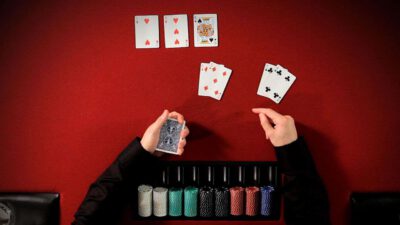
So ideally the thing that you want in place in trapping is to be against a single opponent. The next thing that we’d like to be in place is a dry board. The texture of the flop is incredibly important. The more coordinated the board, which means the more draws that are present the more likely your opponents are to successfully continue against you.
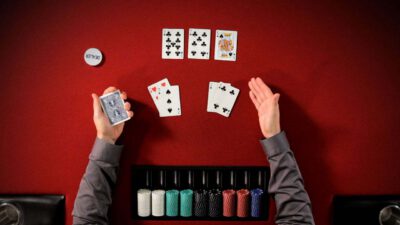
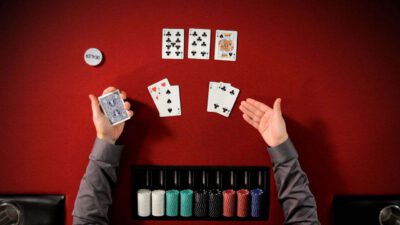
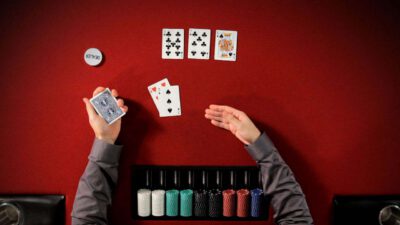
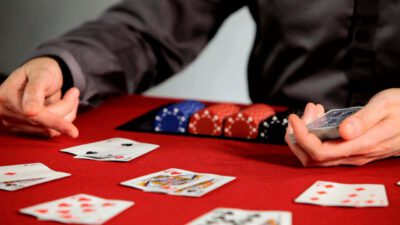
The dryer the board the more scattered it is, and the more rainbow it is. A rainbow board contains no flush draws. A scattered board contains no straight draws. When a board is both scattered and rainbow, like deuce/seven/deuce, all three different suits, or deuce/seven/King, all three different suits. Those are very dry boards. When a board is dry and you’re against a single opponent, it presents an ideal opportunity for trapping. The times where you don’t want to try to trap your opponents and slow play your hand are the times when you’re in big multi-way pots on heavily coordinated boards. When the board is two to the flush and especially when it’s also two to the straight, and you’re against two or more players, especially if you’re against three or more players, that’s a terrible time to trap. First of all, if you have a strong made hand taking an aggressive action will usually be contested by your opponents.
In other words, you don’t need to trap. Someone’s likely to give you action already and when they don’t give you action, you’re just going to win an uncontested pot. That’s the myth about big hands. Just because you have a big had doesn’t mean there’s a way you can magically play it to win all of your opponent’s chips. So multi-way pots and heavily coordinated boards are very problematic for trapping. Single opponents and dry boards where no flushes or straights are present are excellent for trapping.